References / Case studies

From a concrete challenge to a system that works.

Learning products, local-service websites and internal operations tools have very different surfaces. The work behind them follows the same principle: understand the real constraint, reduce complexity and build a solution people can use reliably.

10 project files

Project ledger

Every entry documents the starting point, the implementation and the result. No invented growth figures, no interchangeable portfolio copy.

Glanz Vehicle Detailing
Web experience Live

Glanz Vehicle Detailing

A local service website grounded in real before-and-after work

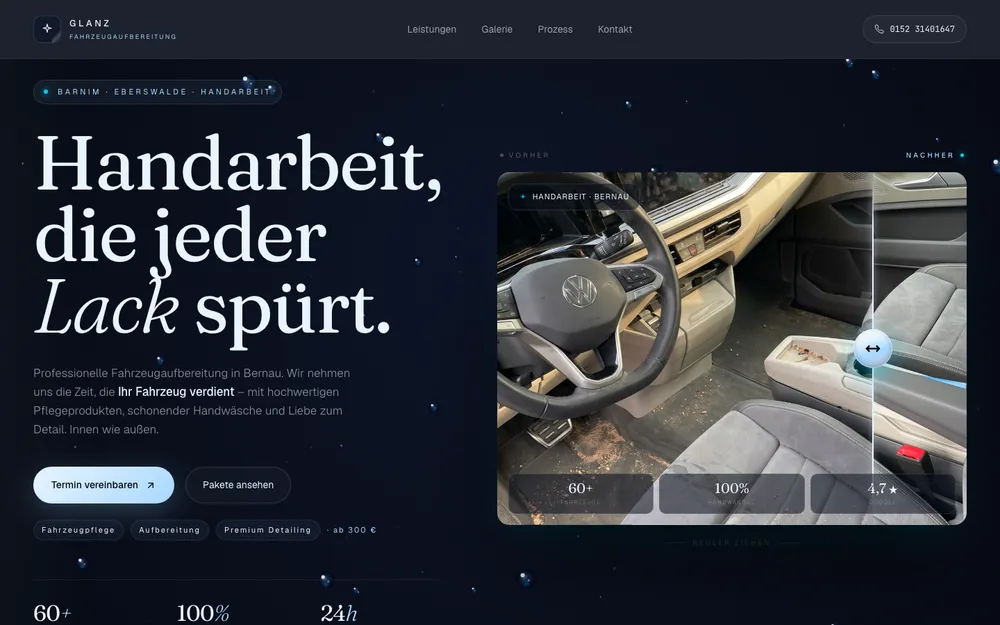
Glanz Vehicle Detailing in Bernau needed a complete digital presence that could explain its services, packages, and process with confidence. The production website combines local proof with a clear journey from initial research to a properly structured enquiry.

Challenge

Vehicle detailing is highly visual, yet prospective customers also need to understand detailed services, package differences, and the working process before reaching out. The site therefore had to establish genuine local credibility while making a complex offer easy to navigate.

Solution

The content was shaped into a focused service journey with clear packages, a transparent process, FAQs, Google reviews, and five real before-and-after pairs. A guided enquiry wizard collects the relevant details, Resend handles delivery, and LocalBusiness data plus a Docker/Coolify setup support production operations.

Outcome

The result is a live, regionally focused website where services, evidence, and the next action reinforce one another. Instead of relying on generic stock imagery, it presents real work and routes enquiries into a dependable contact workflow with the information the team needs.
Open full case study
Satori Learning
Education technology Live

Satori Learning

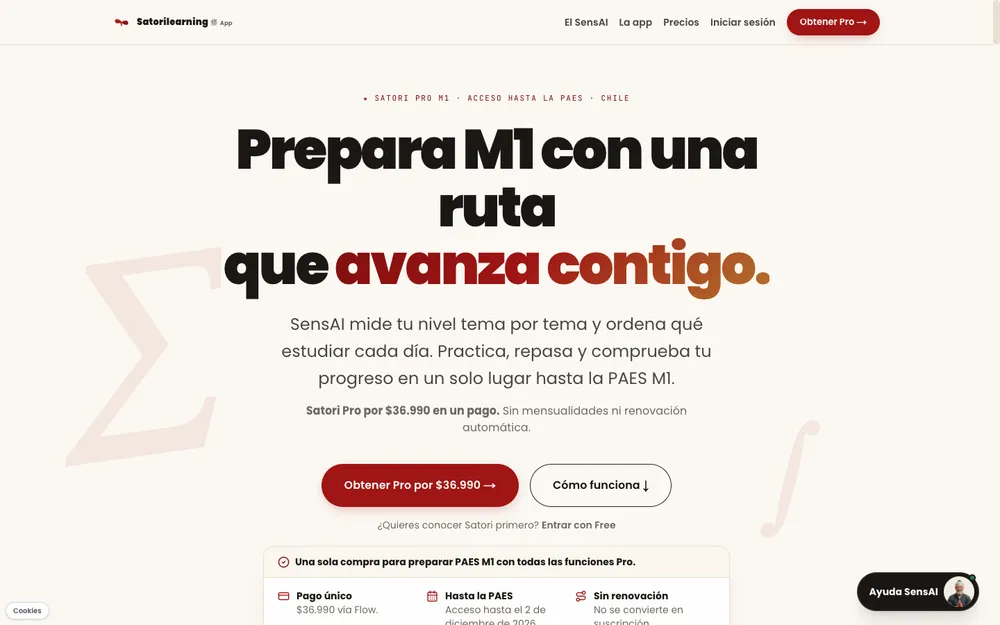
Adaptive PAES preparation with tutoring, learning paths, and game systems

Satori Learning is a Spanish-first mathematics platform for Chile's PAES university entrance exam. It combines diagnostics, structured instruction, and focused practice with a progression and reward system designed to support sustained engagement.

Challenge

PAES preparation spans many topics, ability levels, and question formats, while students arrive with very different gaps and schedules. A linear course library alone could neither establish the right starting point nor provide enough day-to-day direction.

Solution

Two diagnostics provide the input for SensAI, which turns a learner's current state into an individual path. The curriculum combines three-level hints, timed practice, SM-2 flashcards, exams, and analytics, while belts, coins, avatars, and boss battles add a separate motivation layer.

Outcome

The M1 learning experience is live and provides a connected route from initial diagnosis to exam-style practice. M2 content has been prepared but is not yet part of the regular live offering, while Satori Valley is being explored as a separate experimental learning world.

Open full case study
MathHero
Education technology Technical beta

MathHero

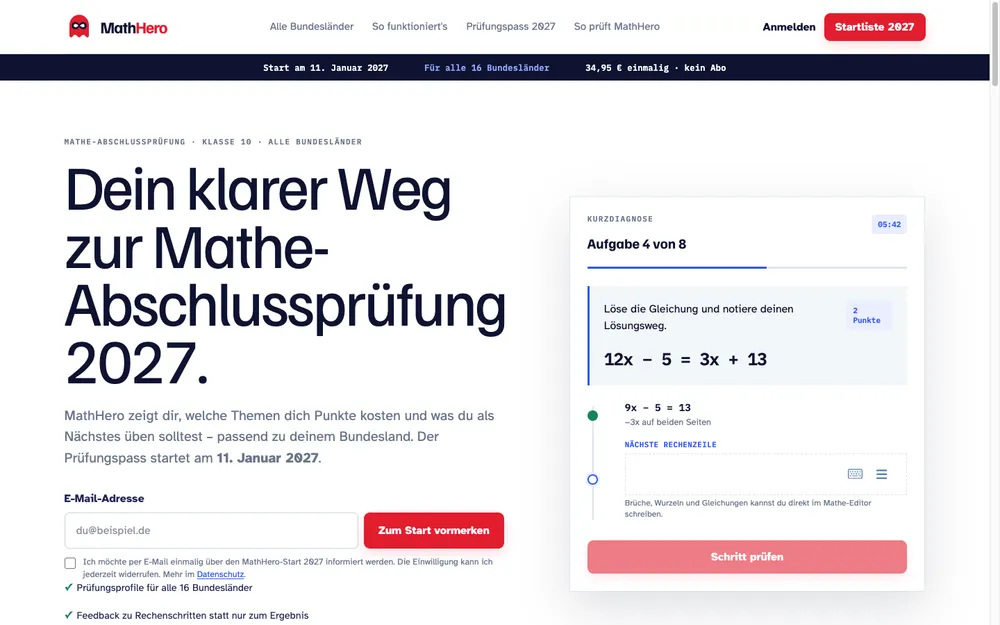
Exam-focused mathematics learning across Germany's state profiles

MathHero is a nationwide platform for mathematics exam preparation in Germany. It takes learners from a short diagnosis through a personal plan and targeted practice to timed simulations and systematic work on past mistakes.

Challenge

Mathematics exams vary by federal state, school type, qualification, year, and permitted resources. The platform had to represent those rules accurately without duplicating the content for every profile, while grading structured answers and partial credit in a reproducible way.

Solution

The content model separates canonical skills, task families, and variants from their eligibility for individual exam profiles. A complete learning flow—diagnosis, plan, explanations, practice, timed training, simulation, and error book—sits on top, supported by deterministic scoring and automated content-quality checks.

Outcome

The production site is accessible, but the product is deliberately described as a technical beta with external launch gates still open. The verified snapshot contains 73 routes, 2,096 tests, and 1,980 published task versions; subject review, payments, SMTP, and legal approvals remain prerequisites for a paid public rollout.

Open full case study
kleider.io
Digital product Live

kleider.io

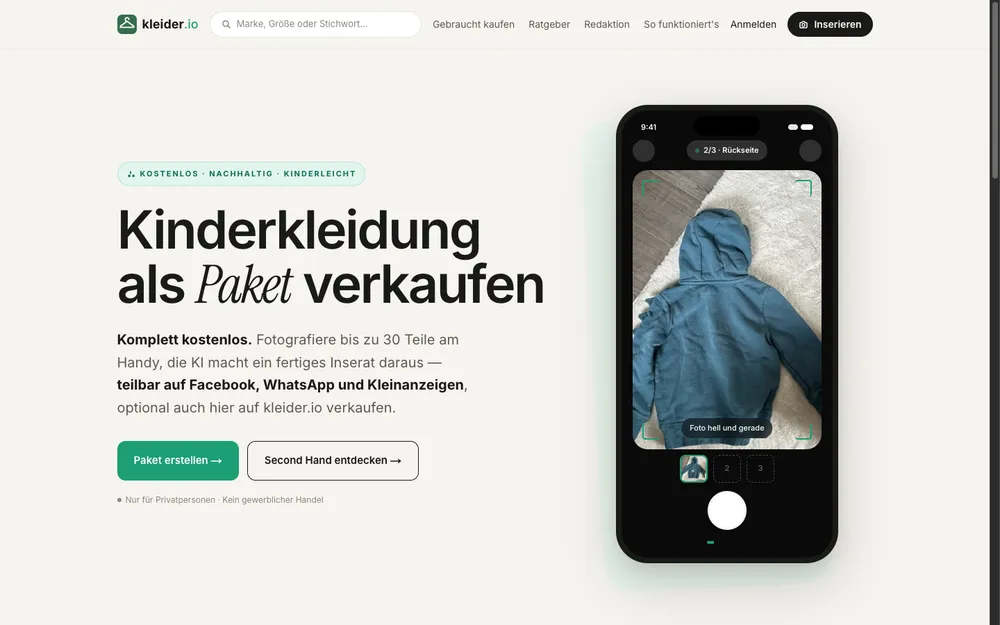
An AI-assisted C2C marketplace for pre-owned children's clothing

kleider.io is a private marketplace for pre-owned children's clothing with an integrated tool for creating complete clothing bundles. It combines buying and selling with a photo-led AI workflow and an extensive editorial and SEO knowledge hub.

Challenge

Children's clothing is often sold in batches, but every individual item still needs images, structured attributes, a pricing decision, and a suitable description. The data-entry burden had to be reduced without automatically publishing unclear or unchecked information.

Solution

The bundle flow handles up to 30 items with two photographs each and extracts editable suggestions for brand, size, colour, condition, and material. It then prepares a price suggestion and channel-specific copy, while authentication, Supabase with RLS, and separate APIs secure the marketplace and publishing workflows.

Outcome

The live platform brings the marketplace, bundle creation, and distribution-ready content into one continuous product. A structured SEO hub extends the transactional journeys with guidance on sizing, care, buying, and selling without implying unverified usage or sales outcomes.

Open full case study
retro-gaming.tech
Digital product Live

retro-gaming.tech

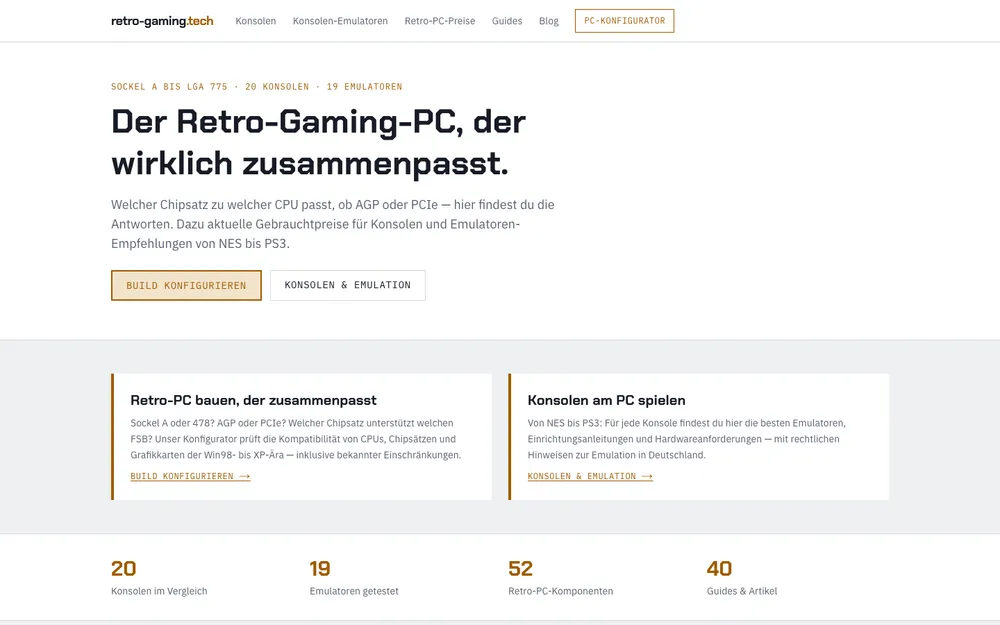
A data-driven retro platform with calculators, finders, and guides

retro-gaming.tech combines editorial content with interactive tools for emulation, retro PCs, consoles, and handhelds. Rather than building a simple article archive, the project became a structured product platform that turns technical data into practical decisions.

Challenge

Information about emulators, hardware compatibility, and retro systems is scattered across many sources with very different structures and levels of reliability. The platform also needed to deliver interactive comparisons and a substantial editorial library in a fast, crawlable, and consistent form.

Solution

A normalized PostgreSQL model separates consoles, emulators, platforms, games, compatibility records, and hardware. SSG/ISR pages build on that foundation alongside a PC builder, emulation calculator, compatibility matrix, handheld finder, price tracker, and MDX content with editorial release gates.

Outcome

The live platform provides one dependable technical foundation for both tools and editorial content. A local audit recorded 180 sitemap URLs and 189 healthy internal link targets, while Lighthouse scored 98–99 for performance and 100 in every other tested category.

Open full case study
bluecore.cards
Digital product Live

bluecore.cards

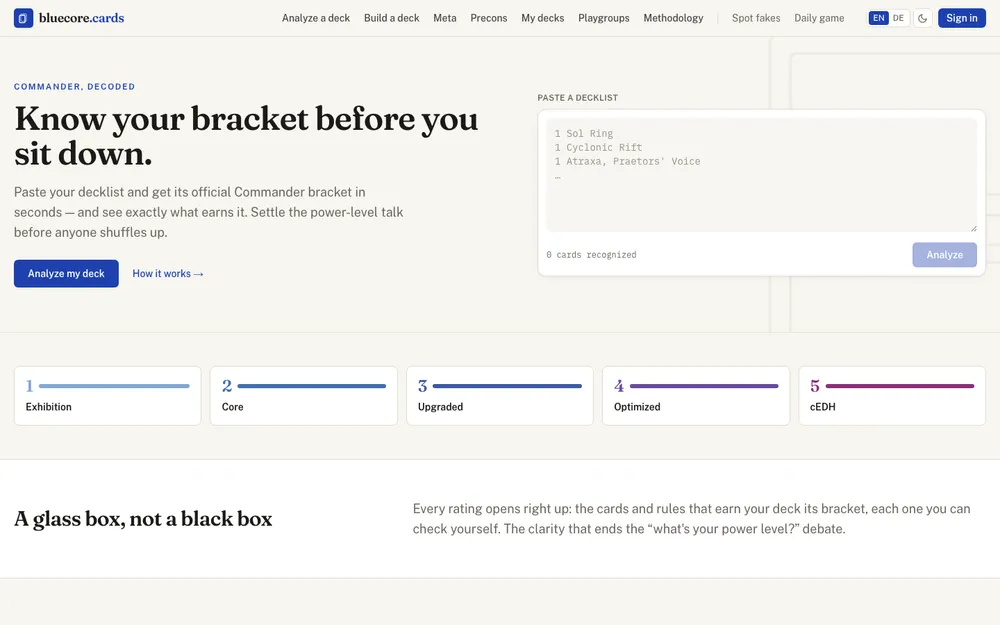
Deterministic Commander analysis for deckbuilding and playgroups

bluecore.cards is a platform for analysing and building Magic: The Gathering Commander decks. It combines an explainable bracket result with practical suggestions, saved decks, and features designed around recurring playgroups.

Challenge

Commander decks cannot be usefully explained by an arbitrary single score: card identity, official bracket rules, and interactions all need to be considered together. The analysis also had to be transparent enough to give players a shared basis for pre-game conversations.

Solution

Decklists are resolved through Scryfall and then evaluated by a deterministic bracket engine. The interface explains the outcome, groups suggestions into shareable categories, and extends the analyser with a builder, saved decks, precons, friends, playgroups, and meta features.

Outcome

The result is a live bilingual Commander platform that brings analysis, deck management, community features, and editorial content into one product. Its canonical sitemap contains 476 URLs, consistently covering the wider content and deck ecosystem as well as the core analyser.

Open full case study
Dojo Cleaner
Operations system Technical beta

Dojo Cleaner

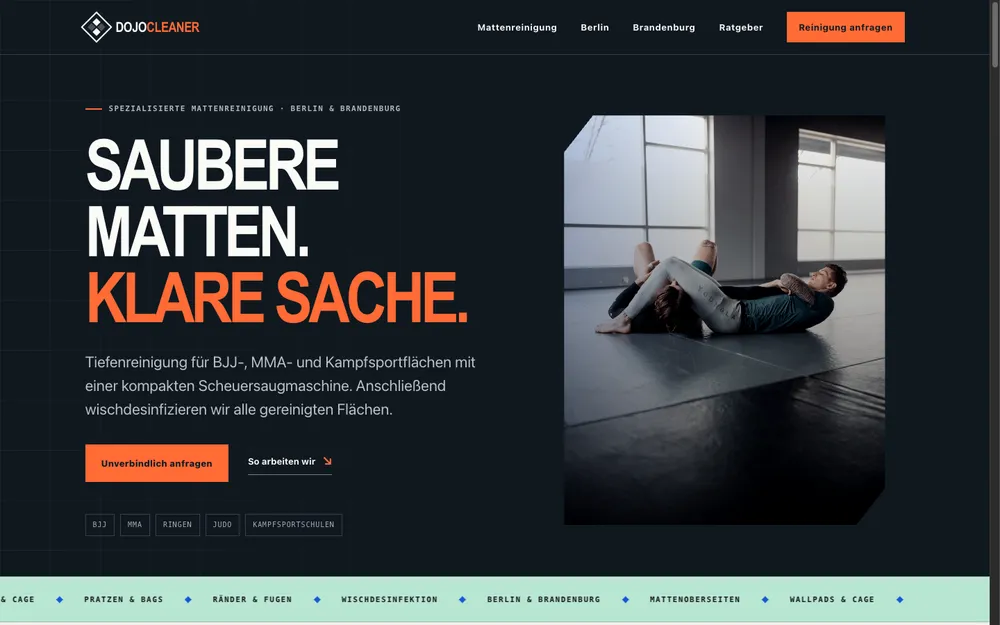
Specialist martial-arts cleaning with an integrated operations board

Dojo Cleaner combines a public website for cleaning BJJ, MMA, and martial-arts facilities with an internal operations CRM. It is an early functional product that brings specialist service communication and operational handling into one system.

Challenge

Cleaning mats, cages, and vinyl surfaces requires material-conscious procedures and precise communication without inappropriate hygiene or health claims. Enquiries also needed to move beyond a disconnected inbox and into estimating, order handling, and documentation.

Solution

Public service and location pages explain the process, its limits, and the enquiry route for Berlin and Brandenburg. Behind them, PocketBase stores enquiries and powers a protected operations board with a pipeline, activities, versioned estimates, and orders, while fail-safe email, CSRF protection, sessions, and rate limits harden the workflow.

Outcome

The result is an early functional product with a public presence and a connected operational workflow. It deliberately makes no claims about completed jobs or business performance because the service remains in beta development.

Open full case study
Panda Gym
Operations system Internal system

Panda Gym

An internal management system for members, classes, and contracts

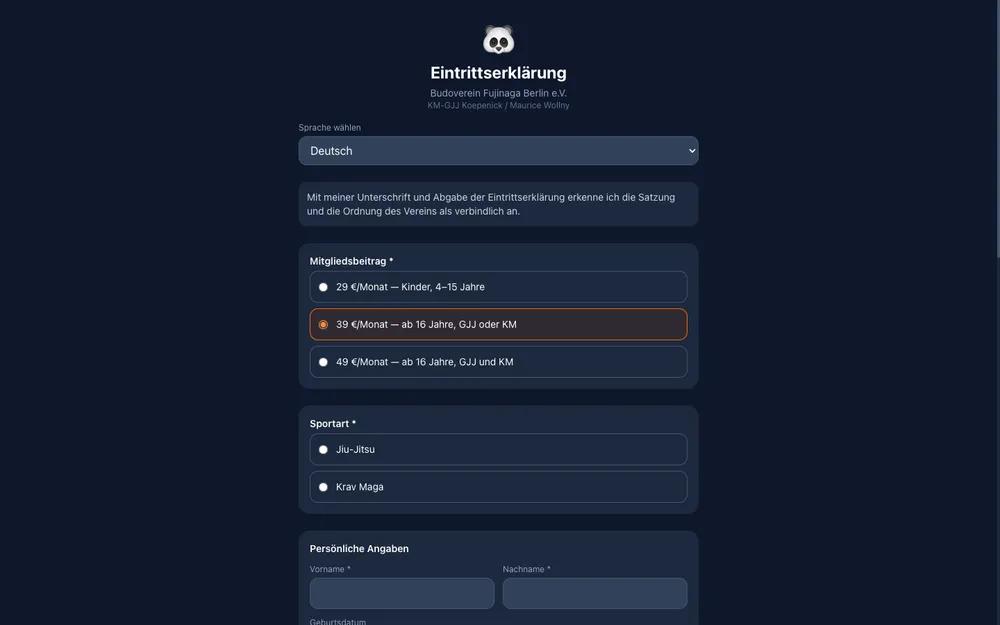
Panda Gym is a role-based internal system for managing a martial-arts gym. It brings contracts, members, attendance, classes, curriculum, and public application flows into one shared workspace.

Challenge

Gym administration easily becomes fragmented across member lists, schedules, contracts, attendance records, belt progress, and external communication tools. Sensitive contract and personal data also required clear roles, consistent states, and controlled hand-offs between public forms and internal processing.

Solution

The application unifies members, coaches, classes, attendance, curriculum, and promotions in a PocketBase model with role-based permissions. Multilingual PDF contracts, public application and cancellation flows, annual fees, analytics, and Spond synchronisation cover the surrounding administrative work.

Outcome

The result is an active internal build that represents the gym's core workflows and their hand-offs in one traceable application. It has not been released as a public SaaS product; development and use remain tied to the organisation's internal processes.

Open full case study
kleinanzeigen-bot-ui
Open source Open-source release

kleinanzeigen-bot-ui

An open-source web interface built around the upstream kleinanzeigen-bot

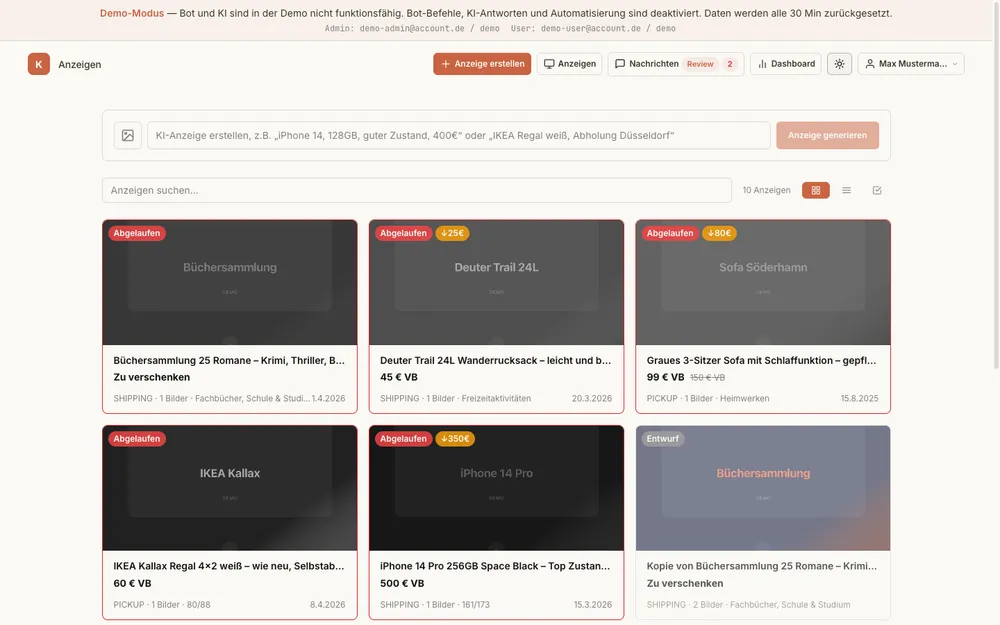
kleinanzeigen-bot-ui is a self-hosted open-source continuation built around the existing upstream kleinanzeigen-bot. It translates file-, CLI-, and browser-based automation into a modern interface for ads, jobs, messaging, and multiple isolated workspaces.

Challenge

The upstream bot provides powerful automation but requires careful handling of YAML files, CLI commands, browser sessions, and asynchronous states. Parallel browser runs can also create login conflicts and write races, while MFA and manual sign-in still need a visible and controllable path.

Solution

The continuation layers ad management, AI-assisted creation, state synchronisation, schedules, and messaging over the existing bot capabilities. A FIFO queue deliberately limits execution to one job, live logs explain its state, and MFA plus noVNC flows enable controlled intervention; workspace isolation separates each user's data and browser profile.

Outcome

The result is a substantial self-hosted management interface with 94 REST endpoints spanning ads, bot control, jobs, authentication, messaging, schedules, and system operations. It remains explicitly an open-source continuation around the upstream kleinanzeigen-bot and does not claim ownership of the original project.

Open full case study
Lead Generation CRM
Operations system Internal system

Lead Generation CRM

An internal outreach and demo system for vehicle detailers

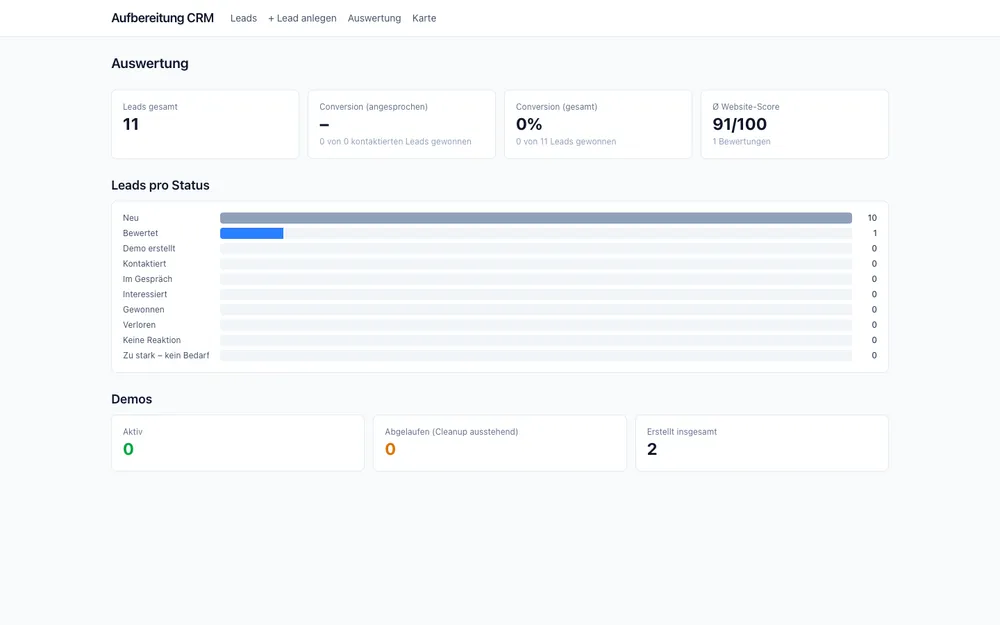
The Lead Generation CRM is an internal tool for researching, assessing, and systematically handling prospective vehicle-detailing website projects. It connects lead records, a map view, demo preparation, and physical QR touchpoints in one traceable process.

Challenge

Local research, website assessment, outreach, and a tailored demo create many disconnected pieces of information and manual hand-offs. An internal system needed to link those stages with a clear record without presenting unfinished automation phases as proven sales performance.

Solution

PocketBase centralises lead records, status, activities, and assessments, while a map supports the regional workflow. Five demo templates, QR letters with scan tracking, and expiring Coolify demos create a technical bridge from selecting a business to presenting a tailored concept.

Outcome

Phase 1—the foundation, lead list, manual creation, detail view, notes, status, and access protection—is verifiably complete. Later automation and production phases remain an internal development effort, so the system is not presented as a publicly available or fully rolled-out CRM.

Open full case study